


Wooden Cat Houses vs Cardboard: Which Belongs in Your Home?

The wooden cat house versus cardboard debate looks simple from the outside: one is heirloom furniture, the other is a recycled box with a doorway cut out. Spend an afternoon comparing the two, though, and the real split is not price or looks. It is where the house has to live, how long you want it to last, and what the cat actually treats it like.
This guide walks through what each material does well, where each one fails, and how to land on the right pick without buying twice. If you are also weighing other indoor setups, our cat tree vs wall shelves breakdown tackles a related call.
Cardboard Cat Houses at a Glance
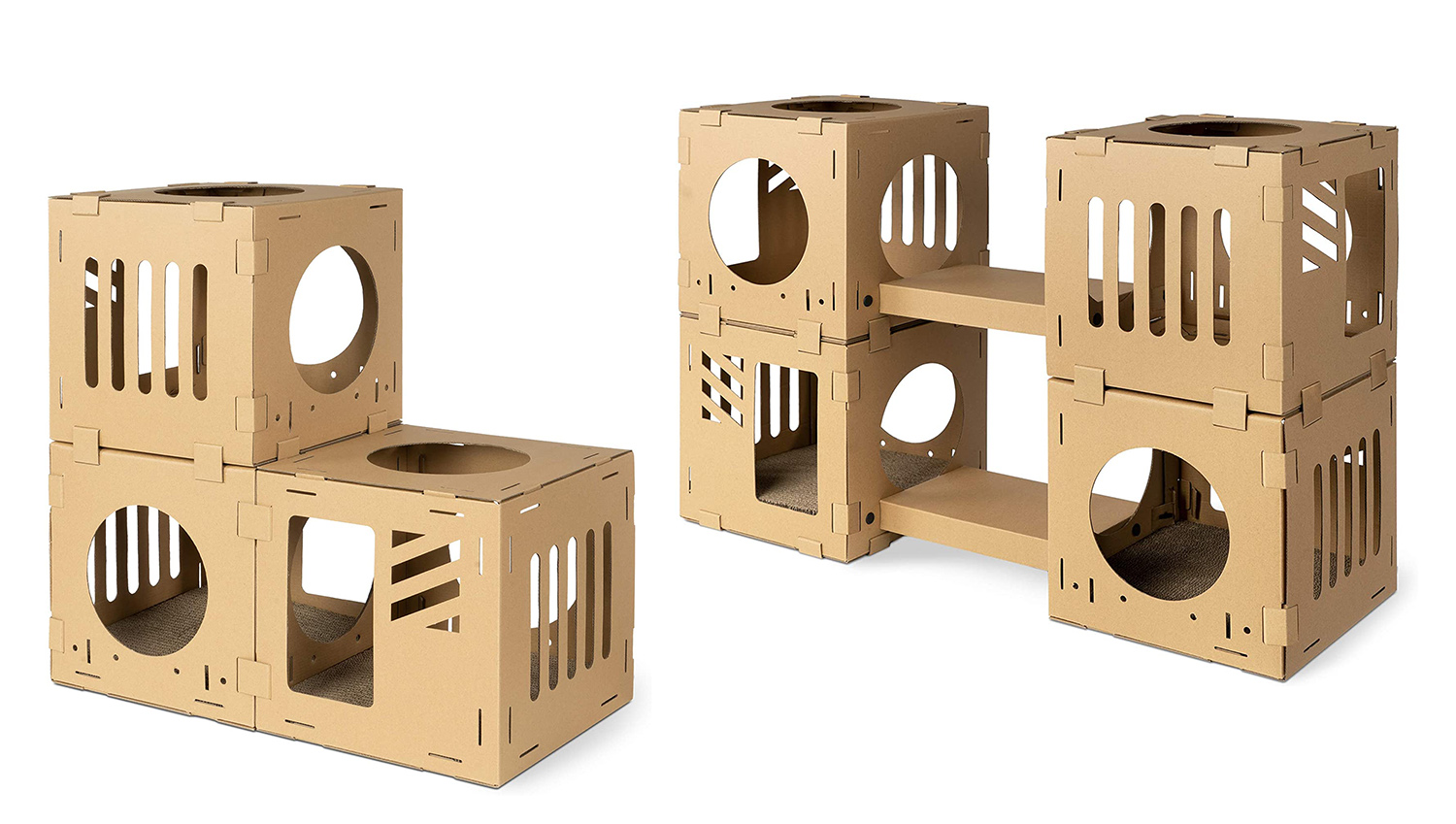
Cardboard is the easiest possible build. No woodworking skills, no power tools, no permanent footprint in the living room. A sturdy corrugated box around 24 inches by 36 inches gives an average adult cat enough room to stand, turn, stretch, nap, and play. Maine Coons and Ragdolls do better with something closer to 28 inches by 40 inches, and seniors appreciate a wider entry and a lower ceiling. Cut a roughly 6 inch door, add a fabric flap for a den feel, and most cats settle in within a day or two.
- Cost: nearly free if you reuse shipping boxes.
- Build time: under an hour with a utility knife and duct tape.
- Tape: duct tape outlasts packing tape; masking tape peels off within days.
- Comfort: thicker corrugated walls feel safer for scratching and stand up to jumping.
- Lifespan: weeks to months before it sags, depending on how rough the cat plays.
Where Wooden Cat Houses Win

Wood is what you reach for when the cat house needs to last and look like furniture rather than packaging. Solid wood handles weight, weather, and years of scratching that cardboard cannot. For outdoor use it is the obvious answer: you can build one from scrap lumber, repurpose an unused dog kennel, or follow a simple dog house plan that doubles as a cat shelter. Indoors, a wooden unit slots into the room the same way a side table does, which makes it the better fit if the cat house is going to be visible every day.
- Outdoor ready: shrugs off rain, snow, and damp ground that destroys cardboard.
- Lifespan: years rather than months, even with daily use.
- Aesthetic: matches living room or porch decor instead of looking like leftover packaging.
- Upgrade path: dog kennel conversions and prebuilt outdoor units with microchip cat flaps are widely available.
- Multi-cat friendly: tolerates two cats jumping on the roof without buckling.
Indoor or Outdoor? That Decides the Material
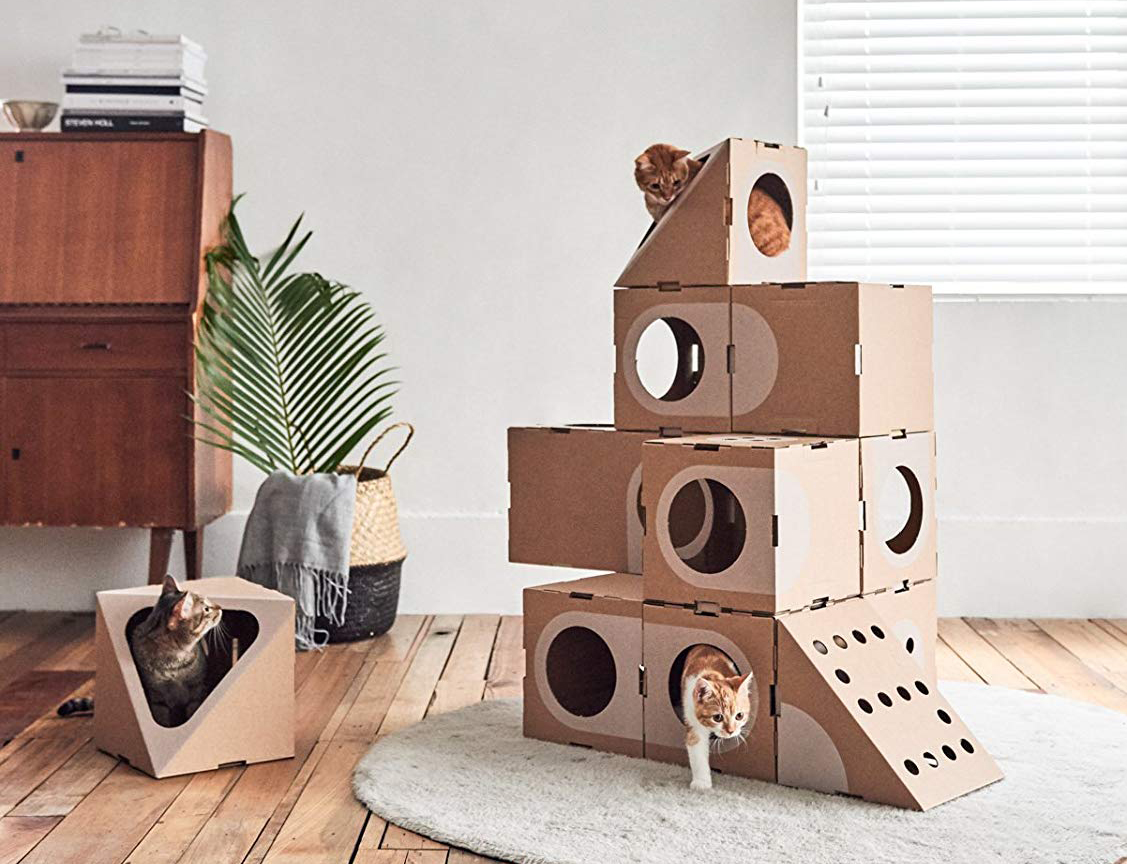
The single most useful filter is where the house is going to sit. Cardboard is fantastic indoors but should never go outside. Exposure to moisture, rain, snow, damp ground, and even outdoor pests like termites turns the walls soft and unstable within days. For any spot exposed to weather, the safer choices are plywood, plastic bins, or an insulated wooden shelter.
If the shelter has to live outside, raise it off the ground. In areas that see heavy snowfall or flooding, 46 cm of clearance is the right target; in milder climates, 30 cm still helps. When raising the unit is not possible, cut the entrance about 5 cm above the base so meltwater cannot pool inside. Pack the bedding with straw rather than hay or blankets, since straw repels moisture while hay molds and fabric draws heat away from the cat.
Side by Side Comparison
The table below maps the trade-offs you are actually choosing between when you pick a material.
| Factor | Cardboard | Wood |
|---|---|---|
| Cost | Almost free | Mid to high |
| Build skill | None | Basic carpentry or buy prebuilt |
| Indoor use | Excellent | Excellent |
| Outdoor use | Not safe | Recommended |
| Lifespan | Weeks to months | Years |
| Weight on roof | Limited (one cat) | Multi-cat capable |
| Look | Crafty, casual | Furniture grade |
| Disposal | Recyclable | Long-term keep |
Sizing and Safety Tips for Either Build
A few rules of thumb carry across both materials, especially if you are building rather than buying.
- Door height: roughly 6 inches works for most adults; widen to 7 or 8 inches for large breeds.
- Ventilation: a main entry plus one or two small windows keeps airflow honest without killing the den feel.
- Stability: reinforce corners on cardboard with double tape, and set the unit on a rug, foam mat, or thin plywood; weight a tipping cardboard build with a book in the base.
- Heat: only low-heat pet-safe pads inside cardboard, never electric blankets; a self-heating blanket is the safer cold-weather option for outdoor wooden shelters.
- Furniture check: if the house sits next to other climbing gear, make sure everything is safe for your cat before the first leap.
- Food, water, litter: keep all three outside the cardboard structure, since spills collapse the walls fast.
- Escape route: outdoor wooden shelters benefit from a second exit hole so the cat is not cornered by predators.
Picking the One Your Cat Will Actually Use
If the cat house is going to live indoors, will be moved between rooms, or is a craft project shared with the kids, cardboard is the right call. It is portable, easy to refresh when it gets grubby, and a fair chunk of cats prefer it because the texture is closer to the boxes they already love. For a permanent spot in the living room or anywhere outside, wood earns its higher price tag through years of service and weather resistance. The shortcut: ask whether the unit will see a hose, a snowflake, or a second cat climbing on the roof. If yes to any of those, go wooden. If it is a quiet corner of an apartment for one cat, a sturdy box is probably all the cat wanted in the first place. The same wood-versus-soft-material trade-off shows up with climbing furniture, which our wood cat tree vs carpet tower guide unpacks in detail.
Common Concerns Before You Pick
What is the best material for a cat house?
Indoors, sturdy corrugated cardboard is hard to beat for cost and comfort. Outdoors, wood, plywood, or insulated builds are the only safe options because cardboard cannot survive moisture.
Will a cardboard box keep a cat warm outside?
Only as an emergency shelter for a single cold night, double-walled with a smaller box inside a larger one and lined with straw. It will not survive rain or snow for long, so treat it as a stopgap until a wooden or plastic shelter is in place.
Is a wooden cat house worth the extra money?
If it is replacing a cardboard build every two or three months, yes within a year. If you have one indoor cat and a corner box already works, the upgrade is mostly aesthetic.
How do I get my cat to use a new house?
Place it in a spot the cat already likes, add a familiar blanket or worn t-shirt for scent, sprinkle a little catnip, and leave one side open for the first day so it does not feel like a trap.
Current Top Sellers
-
Regular price From $170.00 USDRegular priceUnit price per
$200.00 USDSale price From $170.00 USD (-15%) -
Regular price From $1,312.00 USDRegular priceUnit price per
$1,544.00 USDSale price From $1,312.00 USD (-15%) -
Regular price From $172.00 USDRegular priceUnit price per
$202.00 USDSale price From $172.00 USD (-15%) -
Regular price From $112.00 USDRegular priceUnit price per
$64.00 USDSale price From $112.00 USD (-15%)


