


Wood Cat Tree vs Carpet Cat Tower: Which Is Right for Your Cat

Choosing between a wood cat tree and a carpet cat tower can feel like a coin flip when both options promise the same thing: a happy cat with a tall place to climb. The two are not the same product though. A wood cat tree is built like furniture, with solid posts and removable comfort surfaces. A carpet cat tower wraps pressed wood or cardboard tubes in soft fabric so the whole structure feels plush from the moment your cat sniffs it. Which one belongs in your living room comes down to how your cat behaves, how long you want the piece to last, and how much you care about it matching the rest of the room.
This guide walks through the real differences in durability, cleaning, comfort, cost, and aesthetics, then closes with quick answers to the questions most owners ask before buying.
What Sets Wood Cat Trees Apart from Carpet Towers
A wood cat tree prioritizes structural integrity. The frame is oak veneer, plywood, or solid hardwood, and the platforms are usually covered in removable cushions or pads rather than glued down carpet. Some pieces, like the Lotus Cat Tower, reach 69 inches tall on an oak veneer frame with floor levelers built in for stability. The look is intentional, more like a piece of art furniture than a pet accessory.
A carpet cat tower flips that priority. The structure is usually pressed wood or cardboard tubes wrapped in carpet, and the whole surface is soft so the cat lands on something cushioned no matter where it jumps. Most carpet towers sold online cost between fifty and one hundred fifty dollars and prioritize immediate comfort over long term build quality. The carpet wrap is what makes the tower feel plush and what gives cats traction when they climb.
Durability and How Long Each Type Lasts

Wood structures consistently outlast carpet ones. Oak veneer and quality plywood resist the kind of scratching damage that destroys carpet fibers within months. For an active cat, a carpet tower usually needs replacing every one to two years as platforms fray, joints loosen, and the base starts to wobble. A solid wood frame keeps its structural integrity for decades with light upkeep.
The wobble issue is the one most owners notice first. Budget carpet towers use cardboard post cores that compress and fray under a fifteen pound cat launching off the top, and the small screws holding platforms to particle board strip out over months of jumping. Solid wood posts and bolt through or dowel platform attachments survive that same force without loosening. A heavy base helps too. The premium wood towers weigh forty to eighty pounds at the base alone, which is what keeps them from tipping when a Maine Coon decides to sprint up the side.
Cleaning and Daily Maintenance
Wood is faster to clean. A damp cloth removes hair, dust, and the occasional accident from a smooth wood surface in seconds. The cushions on most wood trees are removable and washable, so you can run them through a regular laundry cycle when they start to look tired.
Carpet traps everything it touches. Hair embeds into the fibers, dander accumulates, and odors settle in over time. Keeping a carpet tower clean means regular vacuuming, occasional steam treatment, and eventually full replacement when no amount of cleaning gets the smell out. Households with allergy sufferers usually feel the difference within a few weeks, which is why cat trees without permanent carpet are increasingly popular among sensitive families.
How Cats Actually Use Each Surface
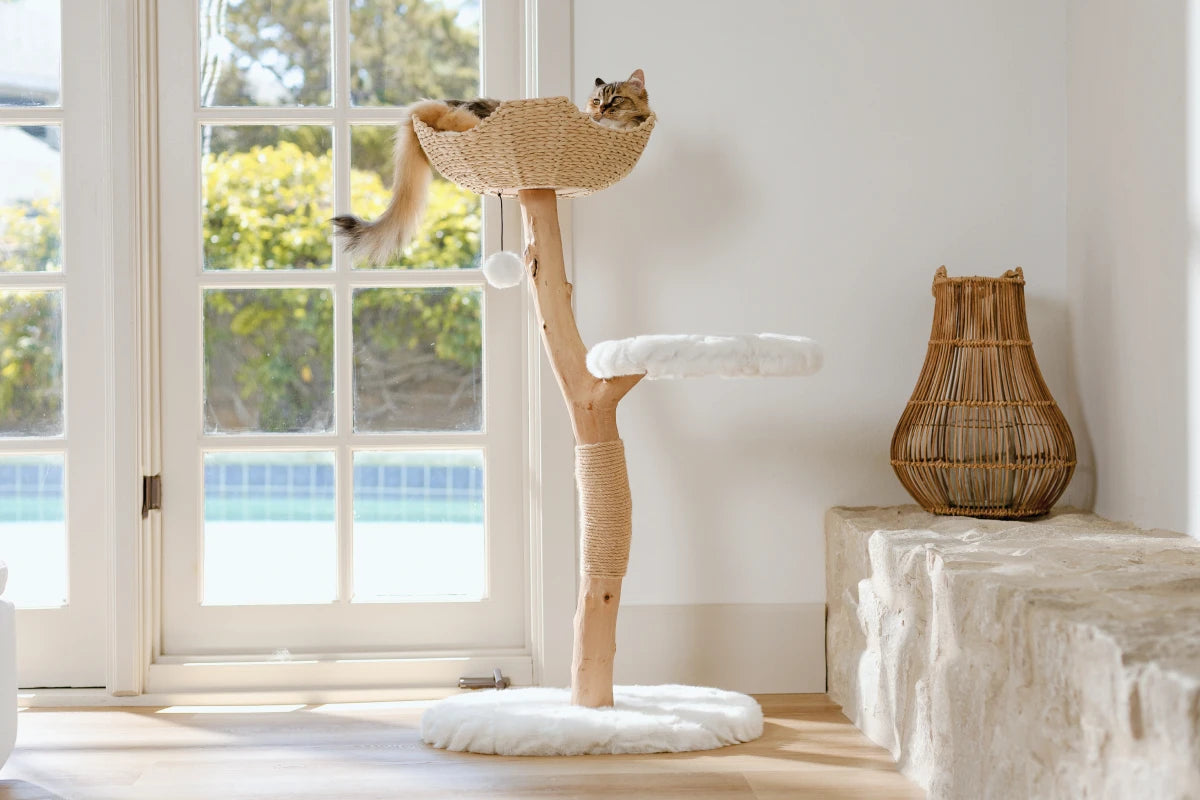
Cats are individualists, but the patterns are predictable. Most cats adapt to a wood platform within one to two weeks, especially when a cushion or removable cover is added for warmth. Wood actually regulates temperature better than carpet, staying cooler in summer and warming quickly from body heat in winter, which is why some cats prefer it once the novelty of the carpet wears off.
Scratching is where carpet looks appealing and ages badly. The texture matches what kittens learn on, so a carpet tower gets used hard the first month. That same texture also disintegrates quickly, and shredded carpet fibers are not safe for cats to ingest. A wood tree with dedicated sisal scratching posts or natural bark sections gives a better surface for the claws, and cats learn to separate scratching zones from resting platforms within days. Sisal lasts longer than carpet, and natural wood bark is the surface cats actually prefer once they try it.
Cost Over a Five Year Span
Sticker price tells only part of the story. The real comparison is what each option costs once you factor in replacements.
| Type | Upfront price | Lifespan | Five year total |
|---|---|---|---|
| Budget carpet tower | $50 to $150 | 1 to 2 years | $150 to $450 |
| Mid range carpet and wood hybrid | $100 to $300 | 3 to 5 years | $100 to $300 |
| Handcrafted solid wood tree | $1,000 plus | 10 to 15 years | $1,000 plus, no replacement |
Stretched across a decade, the gap narrows further. Replacing a hundred dollar carpet tower every eighteen months for ten years costs around six hundred seventy dollars total, and the living room still looks like a pet store the whole time. The premium wood tower costs more upfront and then nothing else for the rest of its life. Whether that math works depends on how long you plan to keep the cat tree and whether you care what it looks like sitting next to the sofa.
Fit with Your Home and Decor

This is the quiet reason owners switch. Modern wood cat trees blend with contemporary furniture in a way that traditional beige carpet towers cannot. A wood tree reads as an intentional design choice. A carpet tower reads as a compromise, which is why so many of them end up exiled to spare rooms or basements where the cat interacts with them less.
The Metropolitan Cat Condo and similar furniture grade pieces let you pick frame colors and platform styles that match the room. Hybrid models go a step further, using removable fabric covers attached with hook and loop strips so you can swap carpet zones for cushions or sisal as the cat ages or as the decor changes. The cat gets the soft surface where it actually rests. The room keeps its look everywhere else.
Hybrid models go a step further, using removable fabric covers attached with hook and loop strips so you can swap carpet zones for cushions or sisal as the cat ages or as the decor changes. The cat gets the soft surface where it actually rests. The room keeps its look everywhere else.
One side effect of buying a quality wood cat tree is that the rest of the room starts to look inconsistent by comparison. A solid wood cat tree next to a laminate console or an MDF shelving unit is a noticeable mismatch once the tree is in place. If you're already committing to real wood for the cat, it's a natural next step to do the same for the shelves, side tables, or floating storage nearby. Natural wood home furniture built from solid Suar wood — the same material category as a quality cat tree frame — sits in a room the same way: heavy, warm, and not something you'll be replacing in two years.
What to Check Before You Buy
Whichever direction you lean, a few build details separate furniture that lasts from furniture that wobbles in a month:
- Base size and weight: at least twenty inches square, fifteen pounds or more at the base for any tower above five feet.
- Post material: solid wood or thick sisal wrapped around a solid core, never cardboard tubes.
- Platform attachment: bolt through or dowel joinery, not small screws into pressed wood.
- Scratching surface: sisal rope or natural bark beats carpet for longevity and for what cats actually prefer.
- Wall anchor kit included for any tree over five feet, especially in homes with multiple cats or larger breeds.
- Removable cushions and pads if you want to wash them or swap textures over time.
Height matters too. The tree should be at least as tall as the highest surface your cat already climbs to. If your cat sits on top of the fridge, a four foot tower will feel like a step stool. Five to six feet covers most adult cats. Six feet and up suits dedicated climbers and active breeds.
Making the Call
The honest answer is that neither material is universally better, the right pick depends on how long you want the tree to last and how much it has to fit into the rest of the room. If the budget is tight and the tree will live in a back room, a mid range hybrid with a wood frame and carpet platforms is the safe choice. If the tree will sit in the living room for the next decade, a solid wood piece costs more upfront but disappears into the decor and outlasts three or four carpet replacements. Decide on lifespan first, look second, then pick the tower that fits both.
Quick Answers
Is wood or carpet better for cats?
Neither is universally better. Wood lasts longer, cleans more easily, and looks more like furniture. Carpet feels softer right out of the box and gives kittens a familiar scratching surface. Most cats adapt to either within two weeks, and hybrid pieces with wood frames and removable carpet or cushion zones cover both needs.
What is the best material for a cat tower?
For the frame, solid wood or oak veneer with bolt through platforms holds up best. For scratching posts, sisal rope on a solid core lasts longer than carpet and cats prefer the texture. Natural wood bark is even better when available. Avoid cardboard post cores wrapped in carpet, which compress and fray within months.
Do cats prefer carpeted cat trees?
Many cats enjoy a carpet surface for lounging because it stays warm and feels cushioned. The same cats often prefer sisal or wood bark for scratching. A tree that combines both, soft carpet or cushion on the resting platforms and sisal posts for scratching, satisfies both preferences without the cat shredding the resting surface.
How tall should a cat tower be?
At least as tall as the highest surface your cat currently climbs to. Four to five feet works for kittens, seniors, and calm cats. Five to six feet is standard for adult cats. Anything over five feet should include a wall anchor kit for safety, especially with multiple cats or larger breeds.
How often do you replace a cat tower?
Budget carpet towers usually need replacing every twelve to twenty four months once the carpet frays or the base wobbles. Mid range hybrid pieces last three to five years. Solid wood trees can last a decade or more, with only the sisal wrap on posts needing occasional rewrapping every three to five years.
Current Top Sellers
-
Regular price From $170.00 USDRegular priceUnit price per
$200.00 USDSale price From $170.00 USD (-15%) -
Regular price From $1,312.00 USDRegular priceUnit price per
$1,544.00 USDSale price From $1,312.00 USD (-15%) -
Regular price From $172.00 USDRegular priceUnit price per
$202.00 USDSale price From $172.00 USD (-15%) -
Regular price From $112.00 USDRegular priceUnit price per
$64.00 USDSale price From $112.00 USD (-15%)


