


Cat Tower for Multiple Cats: How to Pick One That Works for Every Cat

A cat tower works fine for one cat. Add a second cat, and suddenly the same piece of furniture has to function like a vertical apartment building: separate units, multiple staircases, no one blocking the path. A cat tower for multiple cats is not just a bigger version of a single-cat tree. It has different stability requirements, more platforms, wider perches, and traffic patterns that let two or three cats use it at once without staring each other down.
This guide covers what to look for, how to size it, and how many towers you actually need based on how many cats live in the house.
What Multi-Cat Trees Need That Single-Cat Trees Don't
A multi-cat tree functions like a vertical apartment building where each resident needs their own space, amenities, and escape routes. That changes every part of the design. Single-cat trees focus on one comfortable perch and one scratching surface. Multi-cat trees have to accommodate simultaneous use, different personality types, and varying activity levels within the same structure at the same moment.
The visible differences are bigger bases, more platforms, and multiple access points. The invisible differences are reinforced attachment hardware, thicker scratching surfaces, and platform spacing calculated to let cats pass each other without confrontation. Cheap towers marketed as multi-cat usually only add platforms without rethinking the base or traffic flow, which is why they tip when two cats jump at once.
Stability Has to Come First
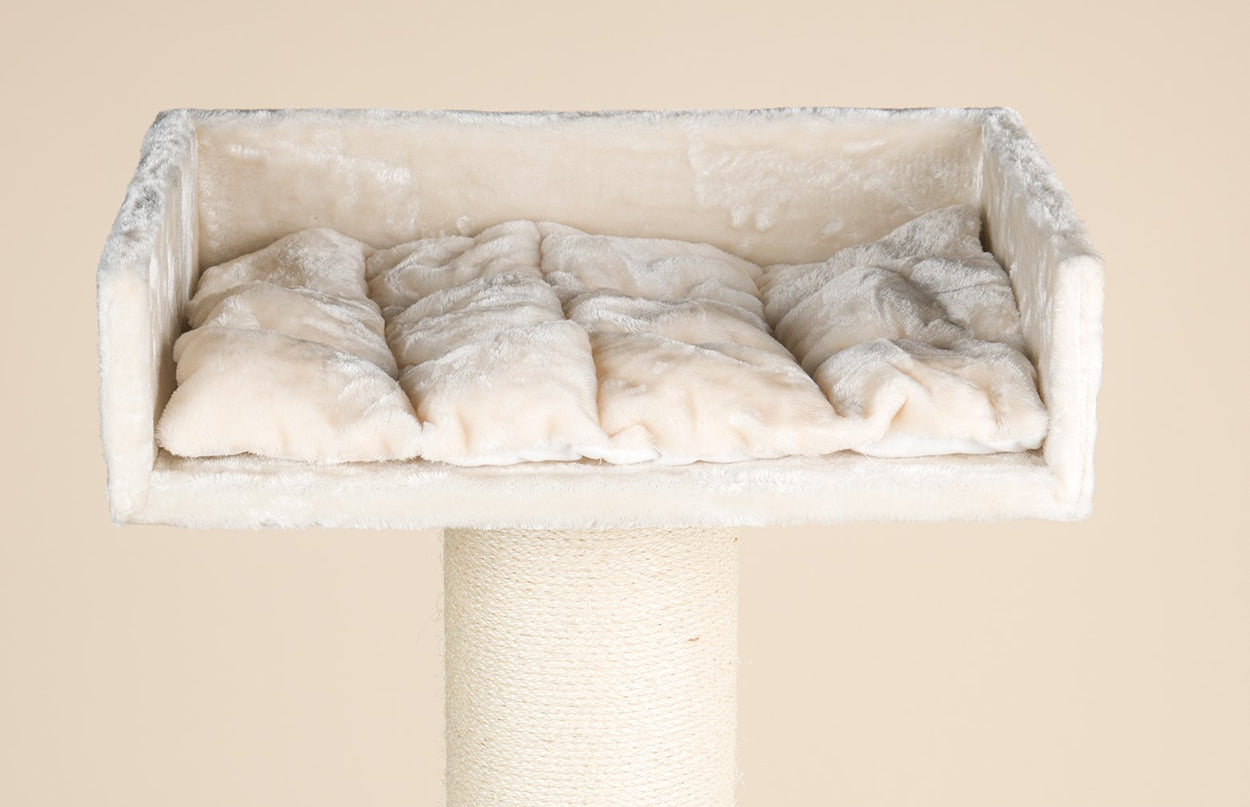
Stability becomes exponentially more important when several cats use the same structure simultaneously. A tower supporting twenty to forty pounds of active cats needs reinforced construction, a wider base, and premium materials that do not flex under stress. Look for solid wood frames rather than particle board cores, metal reinforcement brackets where posts meet platforms, and a base measuring at least twenty inches square. Heavy wide bases keep the tower from wobbling when one cat lands while another climbs.
Weight distribution matters in multi-cat scenarios where sudden movements, jumping, and simultaneous climbing create dynamic stress loads on every joint. Towers with central support posts, cross-bracing, and a low center of gravity perform better than top-heavy designs that might tip during enthusiastic play. The base should weigh enough to absorb impact from a cat launching off the top platform. Anything that wobbles during normal use will eventually loosen at the joints and fail under multi-cat load.
Platform Count and How to Space Them
Cats naturally establish hierarchies, and vertical space is how they negotiate without fighting. Each cat claims a preferred elevation, the dominant cat takes the highest perch, and subordinate cats settle into mid and lower platforms. A multi-cat tower should have at least four distinct platform levels so this sorting can actually happen. With only two or three levels, two cats end up competing for the same prime spot.
Spacing matters as much as count. Platforms positioned twelve to eighteen inches apart let cats move freely without feeling crowded, and multiple access routes prevent any single cat from blocking another's movement. A spiral climbing pattern, dual-sided access points, and bypass routes give every cat an option to avoid direct confrontation while navigating the structure. If your cats sometimes feel cornered, multiple descent paths and interconnected platforms give them quick exits without forcing them past a more dominant cat.
Activity Zones for Different Personalities

Cats in the same household rarely want the same thing from a tower. Active cats want climbing challenges and high perches. Sedentary cats prefer comfortable lounging surfaces and enclosed hideaways. Some cats love communal sleeping, others want isolation. A well-designed multi-cat tower bundles all of these into one structure so each cat finds something they actually use.
Hiding spots are essential when one cat needs quiet retreat space away from social interactions. Enclosed condos, tunnel systems, and secluded platforms give nervous or older cats alone time while still keeping them on the main structure. Scratching posts at multiple heights cover different cats' preferences and reduce competition for the prime scratching spot, which is usually the lowest sisal post that gets the most foot traffic.
Sizing Platforms for Your Largest Cat
Platform dimensions have to fit your biggest cat first. The smallest cat will manage on any platform, but a Maine Coon stretched out on a perch designed for an eight-pound cat will have legs hanging off and choose to lie elsewhere. Platforms measuring eight by twelve inches minimum work for average cats. Larger breeds need twelve by sixteen inches or bigger. Oversized platforms also prevent overcrowding when two cats want to share the same level peacefully.
Tower height should sit between sixty and seventy-two inches for most rooms. That range gives cats enough vertical territory to feel safe perched up high without overwhelming the ceiling proportions or making assembly impossible. Measure the available space first, then subtract a few inches for clearance so cats using the top platform are not bumping their heads on the ceiling.
Material Quality and What Wears Out
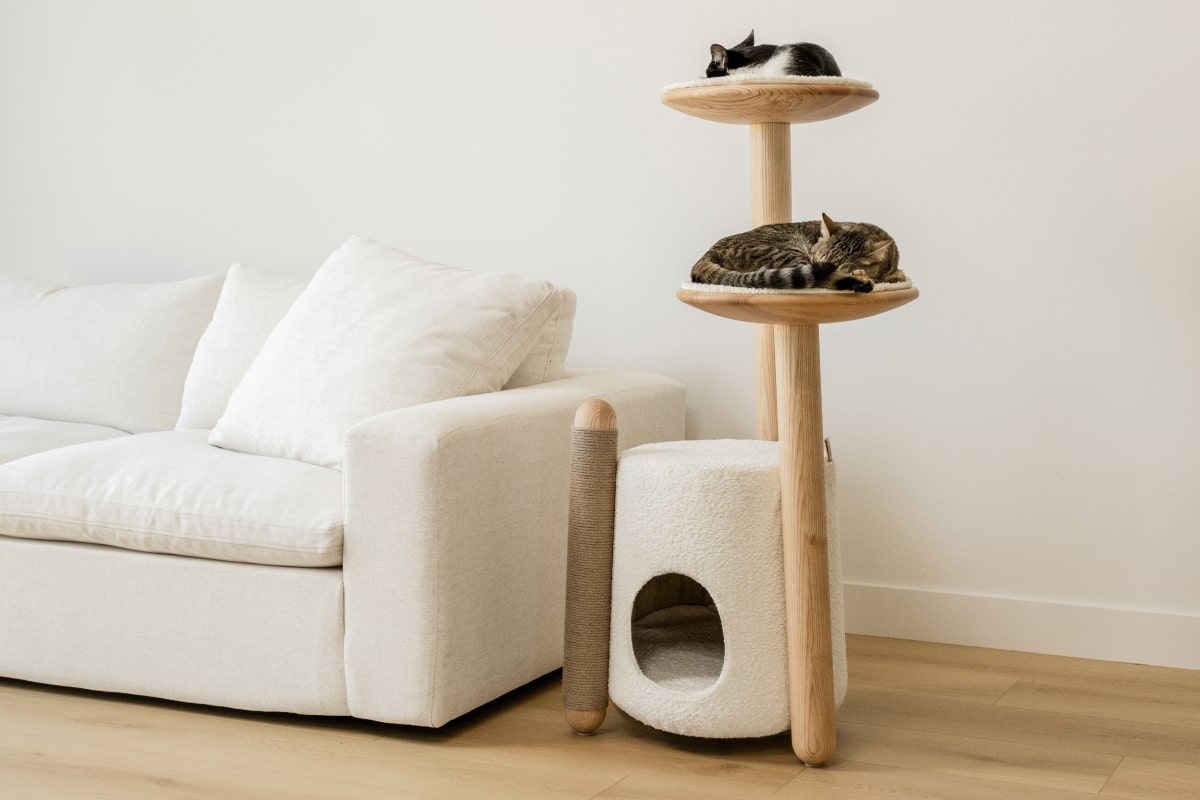
Multi-cat usage burns through materials faster than single-cat usage. The same scratching post that lasts five years for one cat may shred in eighteen months when three cats use it. Invest in the materials that wear out first and replace the rest as needed.
Frame and base
- Solid wood frame rather than pressed particle board, which loses screw grip as cats land repeatedly on the same joint.
- Heavy wide base, weighted to absorb impact from cats jumping between levels rather than transferring force into the joints.
- Reinforced platform attachments, bolt-through or dowel construction not small screws into pressed wood.
Surfaces that wear
- Natural sisal rope posts instead of carpet wrap, since sisal lasts longer and cats prefer the texture for claw maintenance.
- Household-grade carpet on lounging platforms for traction, removable and washable so it survives shedding seasons.
- Replaceable scratching post sleeves and platform covers, so worn components swap out without replacing the whole tower.
Trees with modular designs let you target the specific component that fails rather than discarding the whole structure. A platform cover that wears out is a five-dollar replacement on a modular tower and a full furniture replacement on a one-piece tower.
How Many Towers You Actually Need
The classic rule says one tree per cat. That rule was written for cheap small towers. With a well-designed large tower the math changes, because one tall structure with five to six platforms gives each cat their own territory without needing separate furniture. Two cats can usually share one quality tower if it has at least four levels and dual access. Three cats benefit from a tower with five or six platforms or a primary tower plus a smaller secondary perch in another room.
To make it concrete: two cats can usually share one well-built six-foot tower with at least four platforms and dual-sided access. Three cats work best with a five or six platform tower in the main room, plus a smaller perch or window shelf elsewhere in the home for the cat that loses out on the prime spot. Four or more cats almost always need two structures, either two medium towers in separate rooms or one large multi-level tower paired with a freestanding scratching post in another room. The exact split depends less on cat count than on personality, so watch which cats already coexist peacefully and which avoid each other.
For four or more cats, plan on either one massive tower with six or more platforms or two medium towers placed in different rooms. The goal is enough preferred spots that a dominant cat cannot monopolize the only high perch and force everyone else into low-value real estate. Watch where your cats already gravitate to predict which spots will be in demand. If two cats already share a windowsill peacefully, they will share a wide tower platform. If they each claim a separate room, plan on two towers.
Putting It Together
The right cat tower for multiple cats is the one that matches your specific cats, not the one with the highest weight rating on the box. Measure your largest cat, count your population, and check the base width before anything else. Stability, platform count, and surface materials decide whether the tower lasts five years or starts wobbling in five months. Spend the budget on those three first, and the rest follows.
Quick Answers
How many cats can use one cat tower safely at the same time?
A well-constructed large tower safely holds three to four average cats at once. Practical usage is usually two to three because territorial behavior limits how often the cats actually want to share. The base weight and platform spacing matter more than total weight rating.
What is the difference between a regular cat tree and a multi-cat tree?
Multi-cat trees have wider bases, more platforms, reinforced attachment hardware, and platform spacing designed to prevent traffic bottlenecks. They use thicker sisal rope and more durable cushion fabrics because heavy use accelerates wear. A regular cat tree scaled up by adding platforms is not a multi-cat tree if the base and joints are not reinforced.
How many platforms do I need for three cats?
Four to five distinct platforms at varying heights. The rule is one platform per cat plus one extra level so the dominant cat does not block subordinate cats from accessing prime spots. Spacing of twelve to eighteen inches between platforms keeps traffic moving.
Should I get one big tower or two smaller ones?
One large tower works for two to three cats if it has the platform count and base width. For four or more cats, or for cats that already prefer separate rooms, two medium towers in different rooms reduce territorial pressure better than one giant one.
Current Top Sellers
-
Regular price From $170.00 USDRegular priceUnit price per
$200.00 USDSale price From $170.00 USD (-15%) -
Regular price From $1,312.00 USDRegular priceUnit price per
$1,544.00 USDSale price From $1,312.00 USD (-15%) -
Regular price From $172.00 USDRegular priceUnit price per
$202.00 USDSale price From $172.00 USD (-15%) -
Regular price From $112.00 USDRegular priceUnit price per
$64.00 USDSale price From $112.00 USD (-15%)


