


First Night With a New Puppy: A Calm Plan That Actually Works

The first night with a new puppy is a small storm of excitement, anxiety, and not much sleep. Your pup has just left the only family they have ever known, and now they are in a house full of unfamiliar smells, sounds, and humans. A little preparation, including a solid new puppy checklist, turns a rough night into a manageable one. The setup below borrows from the same vet advice most clinics give new owners, condensed into what actually matters when the lights go out.
Make the Crate a Safe Space
Crate training is recommended for almost every puppy, and the first night is when it earns its keep. Anxious dogs naturally seek out small enclosed spaces, and a crate gives them that shelter from day one. It also helps with housetraining, since puppies will not soil where they sleep. Make it feel like a cozy den, not a punishment.
- Bedding: add a soft dog bed or a folded blanket; some pups prefer a hard surface, so watch what they choose.
- Scent: drop in a worn sweatshirt or t-shirt so your smell is right there with them.
- Comfort item: many breeders and shelters send home a blanket or stuffed toy that smells like mom and the litter; use it.
- Placement: put the crate in your bedroom for the first week so the puppy is not isolated.
- Rule: never use the crate as a time-out; that ruins the safe-space feeling fast.
Time Dinner So Bedtime Stays Quiet

A puppy that eats too close to bedtime is a puppy that wakes you up at 1 a.m. Aim to feed dinner about four hours before lights-out, so around 5 p.m. if your bedtime is 9 p.m. That window gives time to digest and take one solid potty trip before settling in. Keep meals consistent from day one, since regular feeding builds regular bowel movements and makes housetraining easier.
- Under 14 to 18 weeks old: feed three meals a day at morning, lunchtime, and early dinner.
- Over 18 weeks old: drop to two meals, morning and evening.
- Diet: pick a food labeled for puppies or all life stages; large-breed pups need a specific large-breed formula, so ask the vet.
Play Hard, Then Wind Down
Light play in the hour or two leading up to bedtime burns the edge off so the puppy actually sleeps. If bedtime is 9 p.m., aim for active play between 7 and 8 p.m., then use the final hour for something low key. Overstimulation right before the crate is the most common reason a tired puppy still cannot settle.
- Training: short sessions are mentally tiring without revving them up; sit, name, gentle recall.
- Walks: wait until the puppy is fully vaccinated before any public-area walks, then use them for both exercise and sniffing.
- Games: tug, hide and seek, simple scent games, or a puzzle toy.
- Teething chew: a frozen Kong stuffed with canned puppy food soothes sore gums and keeps them busy.
The Last Potty Break Before Bed

Take the puppy out right before bed, even if they went 20 minutes earlier. Keep this trip short and businesslike: out, sniff, pee, hopefully poop, back inside. If you timed dinner well, you will get both. Overnight, expect to take them out a few times during the first weeks. A good rule of thumb is the puppy's age in months plus one equals the maximum hours they can hold the bladder, so a two month old needs a break every three hours. During the day, every 1.5 hours is closer to reality. When you do take them out at night, keep the lights low, do not chat or play, walk straight to the spot and straight back to the crate, so they learn that night trips are not social hours. Never punish accidents; reward successful trips with a calm word or a small treat. If you want to dig into the schedule by age, the AKC potty training guide lays it out by week.
Expect Crying, Learn the Two Kinds
Almost every puppy cries the first night, and many cry the first week. Up until now they slept piled on top of their littermates with mom nearby, and a quiet crate in a strange house feels very different. Crying is not a sign you are doing something wrong, but ignoring it is. Vets say letting a puppy "cry it out" can be physically and emotionally traumatizing, so check on them and figure out what they need.
- Anxiety crying: usually early in the night, right after going into the crate; respond by being nearby, talking gently, or letting them sniff your fingers through the door. If this stretches into true separation anxiety, it needs a longer plan than one night can fix.
- Potty crying: usually middle of the night; restlessness, sniffing, circling, or scratching are the tells.
- Comfort tricks: a worn t-shirt for scent, a heartbeat plush, or a crate cover that creates a den feel.
- Mom and littermate items: that breeder-supplied blanket or stuffed toy is more useful than any new product.
Set the House Rules Before Pickup
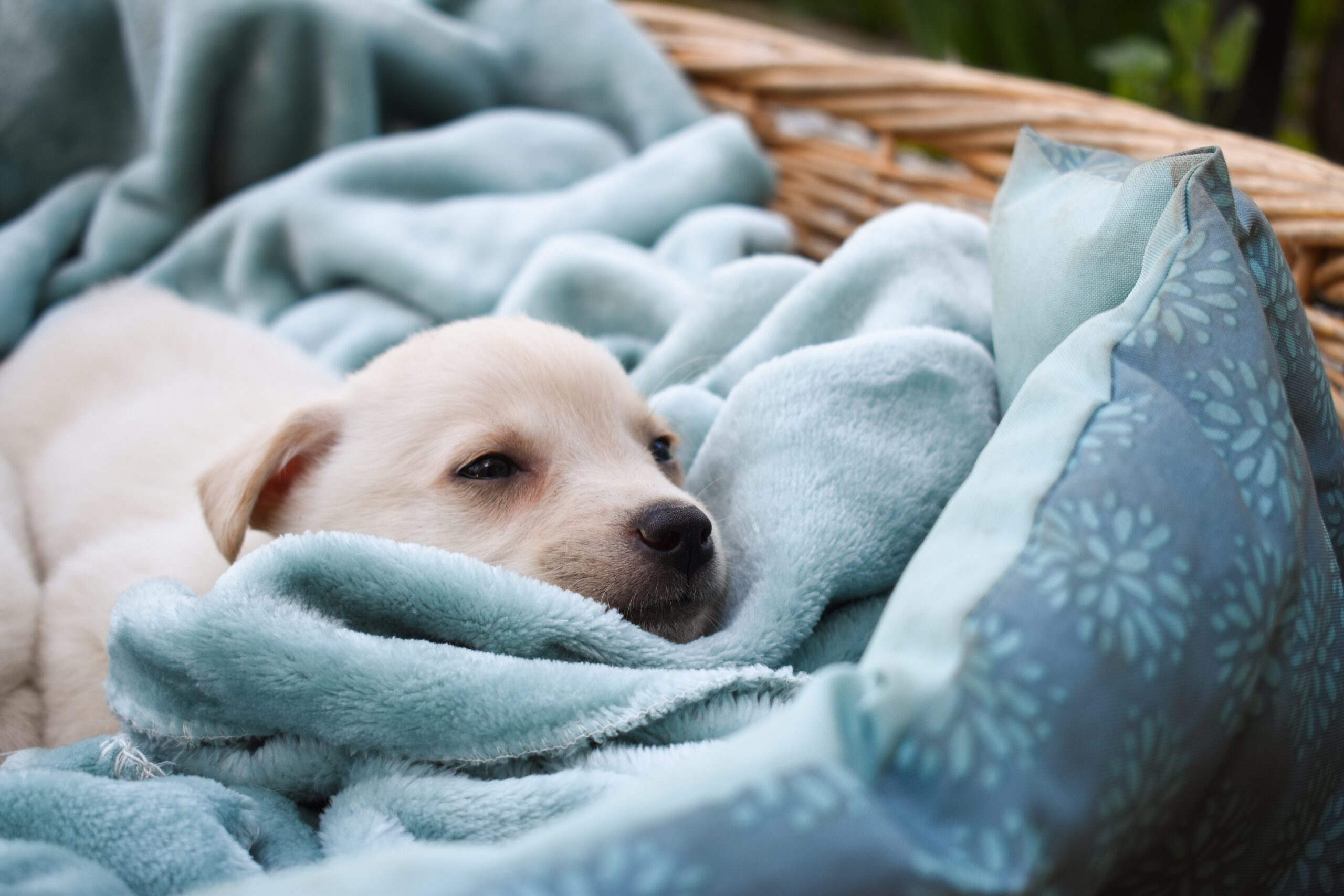
Most of the work that makes the first night easy happens before the puppy even arrives. Pick the spots, set the rules, and tell everyone in the house.
Designate a bed and chill-out zone
Choose where the bed and personal space will live, ideally close to where the family spends evenings. The whole household needs to know that area belongs to the puppy and to leave them alone when they retreat to it.
Place food and water within easy reach
Position food and water bowls near the bed area so the puppy does not have to hunt for them. Growing pups drink a lot, and access matters.
Lock in the ground rules
Decide before pickup: sofa allowed or not, bedroom allowed or not, any rooms strictly off limits. Consistency is the single biggest factor in how fast a puppy learns; sometimes-yes-sometimes-no is confusing for them and frustrating for you.
Puppy-proof the home
Lock away anything toxic or chewable that is not meant to be chewed. Baby gates work for limiting access room by room and for blocking stairs until the puppy is steady on them.
After the First Night, Keep the Rhythm Going
The first night is a milestone, not the finish line. Most of what worked on night one keeps working through week one: same crate, same bedtime, same potty cadence, same calm response when they cry. Bond aggressively during the day with play, cuddles, and short training sessions; trust built in daylight pays off when the lights go out. Some nights you will lose sleep, and some weeks you will wonder what you signed up for. Then somewhere around week three, the puppy starts sleeping through, the accidents drop off, and you realize you have a small, slightly chaotic dog who already thinks of your house as home.
Quick Answers for the First Night
Where should a puppy sleep on its first night home?
In a crate or enclosed sleep space placed inside your bedroom, close enough that you can hear them. Sharing the room beats sharing the bed for at least the first year, since a young puppy cannot hold the bladder long enough to skip a midnight trip.
Is the first night with a puppy the hardest?
Often yes, because the puppy has just lost mom, siblings, and every familiar smell at once. Crying and a few accidents are normal. Each following night usually gets a little easier as they learn the new routine.
Should I let my puppy cry it out the first night?
No. Vets warn that ignoring a crying puppy can do real damage to trust and emotional development. Check on them, rule out a potty need, and reassure them; the goal is a confident dog who knows you will respond.
What should I do if the puppy will not settle at all?
Add the breeder's scent item, drape a light blanket over the crate to dim the world, and sit beside the crate quietly until breathing slows. If they are still wound up, one short, calm potty trip often resets the cycle.
Current Top Sellers
-
Regular price From $170.00 USDRegular priceUnit price per
$200.00 USDSale price From $170.00 USD (-15%) -
Regular price From $1,312.00 USDRegular priceUnit price per
$1,544.00 USDSale price From $1,312.00 USD (-15%) -
Regular price From $172.00 USDRegular priceUnit price per
$202.00 USDSale price From $172.00 USD (-15%) -
Regular price From $112.00 USDRegular priceUnit price per
$64.00 USDSale price From $112.00 USD (-15%)


